Hip Openers
Surya Yantrasana: Exploring Hip and Shoulder Mobility
Hip Openers
Surya Yantrasana: Exploring Hip and Shoulder Mobility
Hip Openers
Surya Yantrasana: Exploring Hip and Shoulder Mobility
1. Introduction: The Asana at a Glance
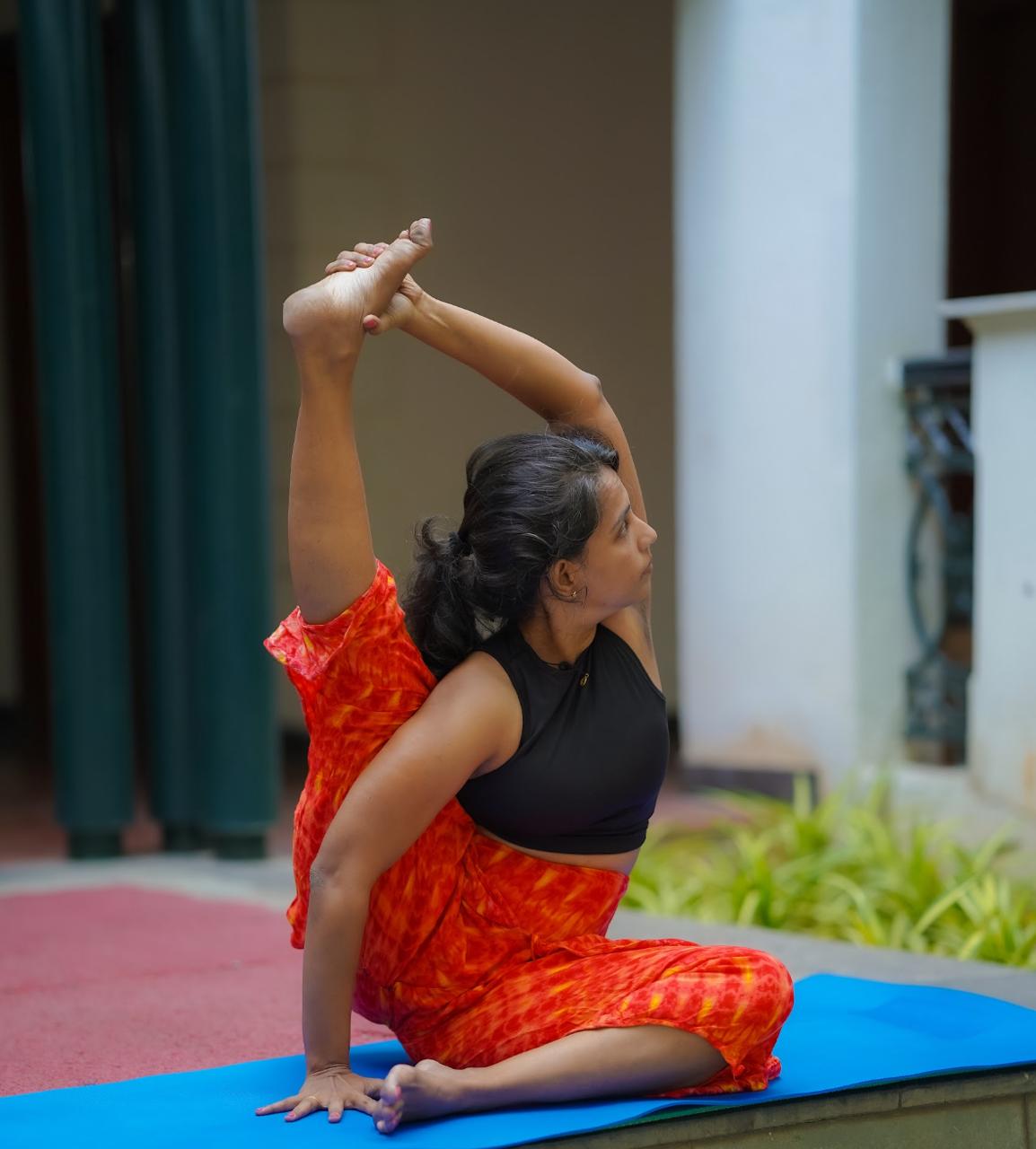
Surya Yantrasana, often called Compass Pose, is an expansive seated posture that asks the body to move in several directions at once. One leg rises overhead while the spine lengthens, the hips open, and the shoulders help create space for the shape.
The pose can look dramatic, but its real practice is quieter. It is an exploration of how strength, mobility, breath, and patience cooperate. Rather than forcing the leg into position, we prepare the body to receive the posture gradually and with clear awareness.
2. What Does Surya Yantrasana Require?
To approach Compass Pose safely, several areas of the body need to work together:
Deep external rotation and flexion through the lifted hip.
Length through the hamstrings and inner thighs.
Mobility in the shoulders and upper back.
A stable supporting leg and grounded sitting bones.
Spinal length so the chest can turn without collapsing.
The pose is not created by pulling harder on the foot. The foundation comes from the pelvis, the breath, and the ability to keep the spine spacious while the limbs explore a larger range.
3. Preparatory Asanas
Baddha Konasana
Bound Angle Pose gently opens the inner thighs and groins. Keep the spine long and allow the knees to descend through steady breath rather than pressure.
Supta Padangusthasana
Reclining Hand-to-Big-Toe Pose develops hamstring length while the back remains supported. It helps you distinguish useful sensation from strain and prepares the lifted-leg action of Compass Pose.
Parivrtta Janu Sirsasana
Revolved Head-to-Knee Pose combines a side bend with hamstring opening and gentle spinal rotation. Practise it with length through both sides of the waist instead of collapsing toward the leg.
Akarna Dhanurasana
Archer Pose teaches the hip to draw the leg closer while the torso remains upright. It is a useful step toward the coordination and concentration required in Surya Yantrasana.
4. Why Is It Called Surya Yantrasana?
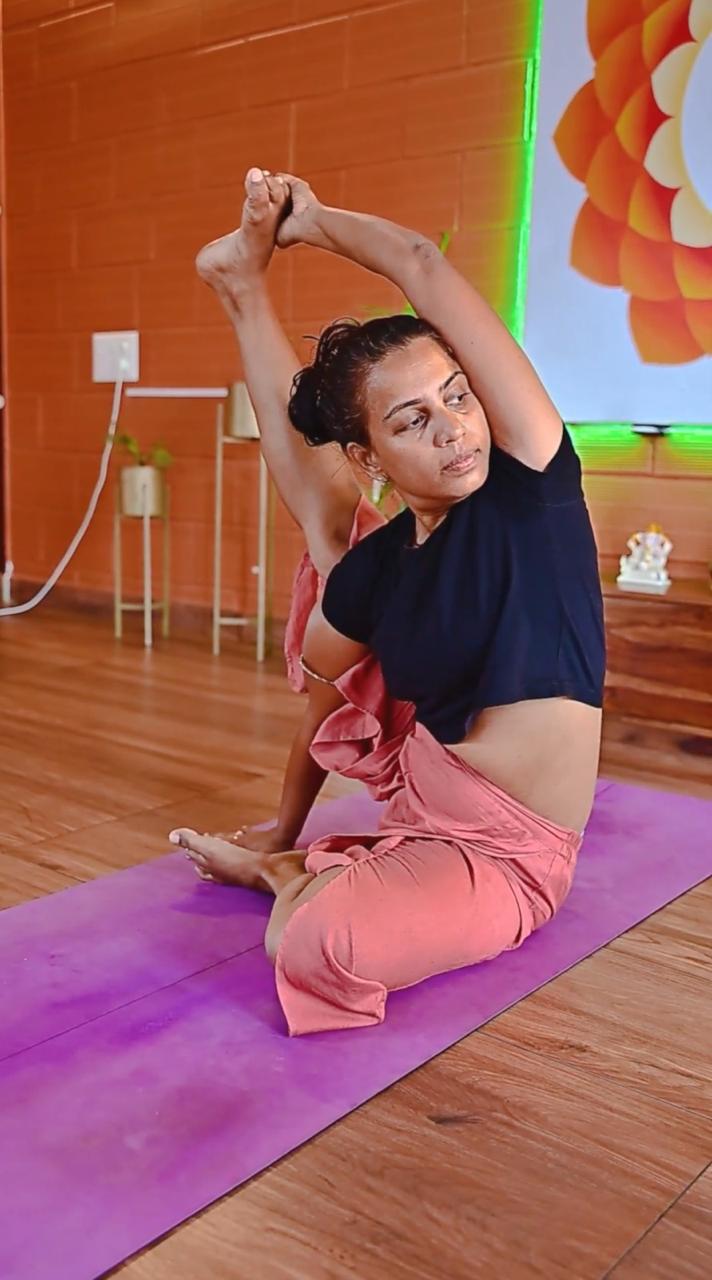
In Sanskrit, surya means sun, yantra can refer to a sacred diagram or instrument, and asana means posture. The name evokes a shape that feels both geometric and radiant, as though the limbs create a living compass around the heart.
Traditional names often invite us to look beyond anatomy. In this posture, the image of the sun can remind us to practise with warmth and clarity, allowing effort to illuminate rather than overwhelm the body.
5. From Physical Openness to Inner Clarity
Surya Yantrasana asks for full attention. The mind must track the supporting hip, the lifted leg, the shoulder position, and the quality of the breath at the same time. That complexity can become a doorway into presence.
As you explore the shape, ask yourself:
Can you keep the supporting sitting bone grounded? Can the lifted leg rise without gripping the jaw? Is the breath still smooth as the body opens? Can you leave enough space to come out of the pose with control?
6. Benefits
May support mobility in the hips, hamstrings, and inner thighs.
Can improve awareness of spinal length and rotation.
May encourage shoulder and upper-back openness.
Supports balance, coordination, and patient concentration.
Offers a practice in meeting intensity with steadiness.
7. Safety and Awareness
Surya Yantrasana places meaningful demand on the hips, hamstrings, shoulders, knees, and lower back. Avoid forcing the foot overhead or rounding through the spine. If you have an active hip, knee, hamstring, shoulder, or lower-back injury, practise gentler variations with guidance from a qualified teacher. A strap may help you explore the direction of the pose without pulling the body beyond its current range.
8. Closing Lines
Surya Yantrasana is not a test of how far the leg can travel. It is a study in creating space without abandoning stability. Move slowly, respect the signals of the body, and let the posture unfold through preparation, breath, and trust. The most luminous practice is not the most extreme one, but the one that leaves you more present than when you began.
1. Introduction: The Asana at a Glance
Surya Yantrasana, often called Compass Pose, is an expansive seated posture that asks the body to move in several directions at once. One leg rises overhead while the spine lengthens, the hips open, and the shoulders help create space for the shape.
The pose can look dramatic, but its real practice is quieter. It is an exploration of how strength, mobility, breath, and patience cooperate. Rather than forcing the leg into position, we prepare the body to receive the posture gradually and with clear awareness.
2. What Does Surya Yantrasana Require?
To approach Compass Pose safely, several areas of the body need to work together:
Deep external rotation and flexion through the lifted hip.
Length through the hamstrings and inner thighs.
Mobility in the shoulders and upper back.
A stable supporting leg and grounded sitting bones.
Spinal length so the chest can turn without collapsing.
The pose is not created by pulling harder on the foot. The foundation comes from the pelvis, the breath, and the ability to keep the spine spacious while the limbs explore a larger range.
3. Preparatory Asanas
Baddha Konasana
Bound Angle Pose gently opens the inner thighs and groins. Keep the spine long and allow the knees to descend through steady breath rather than pressure.
Supta Padangusthasana
Reclining Hand-to-Big-Toe Pose develops hamstring length while the back remains supported. It helps you distinguish useful sensation from strain and prepares the lifted-leg action of Compass Pose.
Parivrtta Janu Sirsasana
Revolved Head-to-Knee Pose combines a side bend with hamstring opening and gentle spinal rotation. Practise it with length through both sides of the waist instead of collapsing toward the leg.
Akarna Dhanurasana
Archer Pose teaches the hip to draw the leg closer while the torso remains upright. It is a useful step toward the coordination and concentration required in Surya Yantrasana.
4. Why Is It Called Surya Yantrasana?
In Sanskrit, surya means sun, yantra can refer to a sacred diagram or instrument, and asana means posture. The name evokes a shape that feels both geometric and radiant, as though the limbs create a living compass around the heart.
Traditional names often invite us to look beyond anatomy. In this posture, the image of the sun can remind us to practise with warmth and clarity, allowing effort to illuminate rather than overwhelm the body.
5. From Physical Openness to Inner Clarity
Surya Yantrasana asks for full attention. The mind must track the supporting hip, the lifted leg, the shoulder position, and the quality of the breath at the same time. That complexity can become a doorway into presence.
As you explore the shape, ask yourself:
Can you keep the supporting sitting bone grounded? Can the lifted leg rise without gripping the jaw? Is the breath still smooth as the body opens? Can you leave enough space to come out of the pose with control?
6. Benefits
May support mobility in the hips, hamstrings, and inner thighs.
Can improve awareness of spinal length and rotation.
May encourage shoulder and upper-back openness.
Supports balance, coordination, and patient concentration.
Offers a practice in meeting intensity with steadiness.
7. Safety and Awareness
Surya Yantrasana places meaningful demand on the hips, hamstrings, shoulders, knees, and lower back. Avoid forcing the foot overhead or rounding through the spine. If you have an active hip, knee, hamstring, shoulder, or lower-back injury, practise gentler variations with guidance from a qualified teacher. A strap may help you explore the direction of the pose without pulling the body beyond its current range.
8. Closing Lines
Surya Yantrasana is not a test of how far the leg can travel. It is a study in creating space without abandoning stability. Move slowly, respect the signals of the body, and let the posture unfold through preparation, breath, and trust. The most luminous practice is not the most extreme one, but the one that leaves you more present than when you began.
1. Introduction: The Asana at a Glance
Surya Yantrasana, often called Compass Pose, is an expansive seated posture that asks the body to move in several directions at once. One leg rises overhead while the spine lengthens, the hips open, and the shoulders help create space for the shape.
The pose can look dramatic, but its real practice is quieter. It is an exploration of how strength, mobility, breath, and patience cooperate. Rather than forcing the leg into position, we prepare the body to receive the posture gradually and with clear awareness.
2. What Does Surya Yantrasana Require?
To approach Compass Pose safely, several areas of the body need to work together:
Deep external rotation and flexion through the lifted hip.
Length through the hamstrings and inner thighs.
Mobility in the shoulders and upper back.
A stable supporting leg and grounded sitting bones.
Spinal length so the chest can turn without collapsing.
The pose is not created by pulling harder on the foot. The foundation comes from the pelvis, the breath, and the ability to keep the spine spacious while the limbs explore a larger range.
3. Preparatory Asanas
Baddha Konasana
Bound Angle Pose gently opens the inner thighs and groins. Keep the spine long and allow the knees to descend through steady breath rather than pressure.
Supta Padangusthasana
Reclining Hand-to-Big-Toe Pose develops hamstring length while the back remains supported. It helps you distinguish useful sensation from strain and prepares the lifted-leg action of Compass Pose.
Parivrtta Janu Sirsasana
Revolved Head-to-Knee Pose combines a side bend with hamstring opening and gentle spinal rotation. Practise it with length through both sides of the waist instead of collapsing toward the leg.
Akarna Dhanurasana
Archer Pose teaches the hip to draw the leg closer while the torso remains upright. It is a useful step toward the coordination and concentration required in Surya Yantrasana.
4. Why Is It Called Surya Yantrasana?
In Sanskrit, surya means sun, yantra can refer to a sacred diagram or instrument, and asana means posture. The name evokes a shape that feels both geometric and radiant, as though the limbs create a living compass around the heart.
Traditional names often invite us to look beyond anatomy. In this posture, the image of the sun can remind us to practise with warmth and clarity, allowing effort to illuminate rather than overwhelm the body.
5. From Physical Openness to Inner Clarity
Surya Yantrasana asks for full attention. The mind must track the supporting hip, the lifted leg, the shoulder position, and the quality of the breath at the same time. That complexity can become a doorway into presence.
As you explore the shape, ask yourself:
Can you keep the supporting sitting bone grounded? Can the lifted leg rise without gripping the jaw? Is the breath still smooth as the body opens? Can you leave enough space to come out of the pose with control?
6. Benefits
May support mobility in the hips, hamstrings, and inner thighs.
Can improve awareness of spinal length and rotation.
May encourage shoulder and upper-back openness.
Supports balance, coordination, and patient concentration.
Offers a practice in meeting intensity with steadiness.
7. Safety and Awareness
Surya Yantrasana places meaningful demand on the hips, hamstrings, shoulders, knees, and lower back. Avoid forcing the foot overhead or rounding through the spine. If you have an active hip, knee, hamstring, shoulder, or lower-back injury, practise gentler variations with guidance from a qualified teacher. A strap may help you explore the direction of the pose without pulling the body beyond its current range.
8. Closing Lines
Surya Yantrasana is not a test of how far the leg can travel. It is a study in creating space without abandoning stability. Move slowly, respect the signals of the body, and let the posture unfold through preparation, breath, and trust. The most luminous practice is not the most extreme one, but the one that leaves you more present than when you began.